
A local news portal in Sudurpaschim province of Nepal, Dinesh Khabar, reported on January 12 that a Nepali in Malaysia died after falling into a fishery. Just two days after that, a United States-based news portal run by Nepalis there reported the death of two Nepalis in Portugal while they were fishing in a sea.
Researchers say these two incidents, reported in the same week from different parts of the world, are just the tip of the iceberg. They suggest dozens of Nepalis drown abroad every year and it is ever increasing. They argue that the lack of swimming culture in Nepal contributes a lot to the problem, advocating for practical measures to be exercised by the government, the migrant workers and students and other stakeholders.
The intensity of the problem
No one knows the exact numbers of Nepalis killed in aquatic accidents abroad in a specific period. Forget about specialised data about fatal drowning cases, the government does not have any records about exactly how many Nepalis die abroad, due to whatever causes, in a specific period. Suresh Adhikari, the information officer at the Ministry of Foreign Affairs, says Nepali embassies in the countries which host Nepalis in a big number might have such a data system, but there are not any integrated records. Therefore, there are not sufficient data to prove the intensity of the problem.
However, the concerned government agencies have also agreed that the problem is significant and it needs immediate attention. Subsequently, recordkeeping has started to some extent. The Nepali Embassy in Australia, for example, has been recording the deaths of Nepalis due to drowning since 2016. A senior official of the embassy informs that 10 deaths have been recorded since then. It means two Nepalis died in the water every year on an average.
“As the number of Nepali migrants is increasing every year here, the number of fatalities is also going up,” Dila Kharel, a leader of the Non-resident Nepali Association in Australia, says, adding there could be some unrecorded cases also.
The Royal Life Saving Society Australia has a different data set, but it has also noticed that a significant number of Nepalis are losing their lives to Australian waters. “The Nepali community has been identified as an emerging community at risk, with 14 drowning deaths recorded in six years (2013/14 – 2018/19),” the society’s Research and Policy Manager Stacey Pidgeon says, “It does not include three most recent drowning deaths of Nepalis in the last few weeks.”

Researchers believe the problem is not restricted to Australia only. Puspa Raj Pant, a Nepali injury prevention researcher currently based in Britain, says Nepali communities living in all coastal cities in different parts of the world are at risk. Stating that he read news reports about drowning deaths of Nepalis from different countries including the United States, the United Kingdom, Portugal, Australia, Kuwait, Qatar, Saudi Arabia, Japan and India in the past few years, he says both Nepali migrant workers and students face equal risks.
Pant estimates that at least two dozen Nepalis drown abroad every year.
The Nepali side of the universal problem
Of course, Nepalis are at the risk of aquatic accidents, but is this problem only a concern for Nepalis? After all, anyone who cannot swim is prone to losing their life if they surf or swim, notwithstanding their nationality or origin. Why should it bother Nepalis only? Why is the number of deaths among Nepalis higher than that in other communities?
Pant explains, “As Nepal does not have sea or beaches, Nepalis do not have any experience of waves, tides or water current, nor are there any places where one can learn about water safety or seawater safety.” Pidgeon also agrees, “Key risk factors for drowning include lack of swimming skills and being unfamiliar with the environment. We know that many people come to Australia as adults and may not have had the opportunity to learn swimming and water safety skills previously yet they still participate in risk-taking behaviours.”
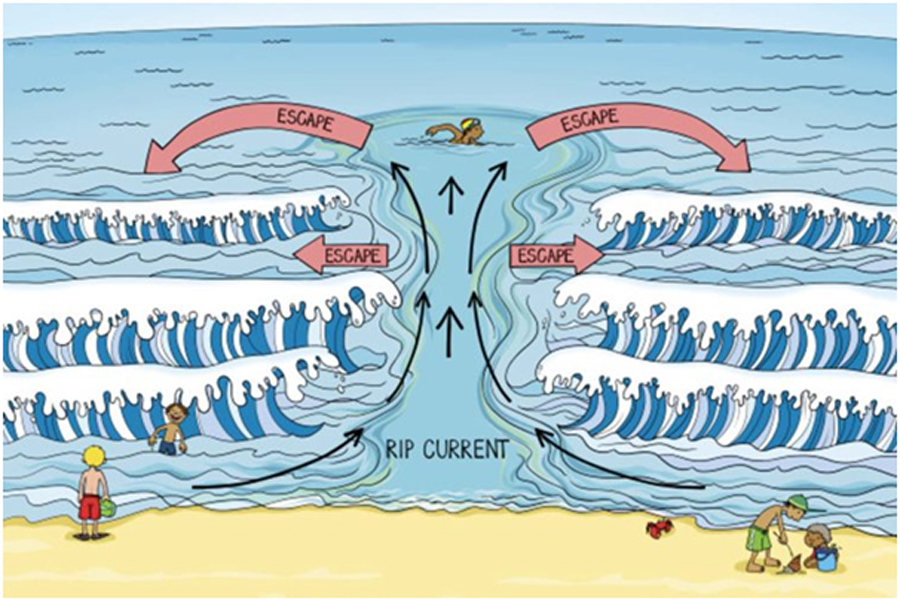
Similarly, Pant says, “To be honest, we Nepalis tend to underestimate the hazards, perhaps comparing the seawater with water in rivers and streams in our countries. This is the biggest mistake.” He thinks Nepalis are more innocent than ignorant, about such risks. “I feel sorry and have sympathy for those who have lost lives. But, I am not blaming them; it is about our culture that is responsible.”
The embassy official believes a section of the problem also attributes to carelessness, “Sometimes, many Nepalis swim under the influence of alcohol.”
Likewise, the people who are not familiar with the beach recreational activities find it exciting to visit a beach and many of them want to jump into the water straight away, the Australian rese
Read the full story on Online Khabar
The post Dozens of Nepalis lose their lives to overseas waters every year. Why are they at a higher risk? appeared on Nepal123.com.


